The Project entails a commercial farm and a vocational school to support the trainees at the Preacher Training school and the Christians in the community. They are equipped with skills through which they can be job creators to sustain their families, as well as serving as preachers and evangelists in their region. We want the support to have modern cattle on the farm as well as irrigation machinery that will enable us to grow sorghum, millet, cassava, sunflower, beans, vegetables, and Maize in this semi-arid area of Karamoja. The vocational school provides skills in brick laying, carpentry, tailoring, and hair plaiting.
Why and How We Equip Them with Skills:
Training youths and women in tailoring is a vital strategy embraced by our mission in Karamoja. We aim at combating high unemployment, reducing reliance on traditional pastoralism, and preventing exploitation.
Tailoring creates immediate opportunities to generate an income by sewing and mending clothes for the local community.
CARPENTRY & JOINERY
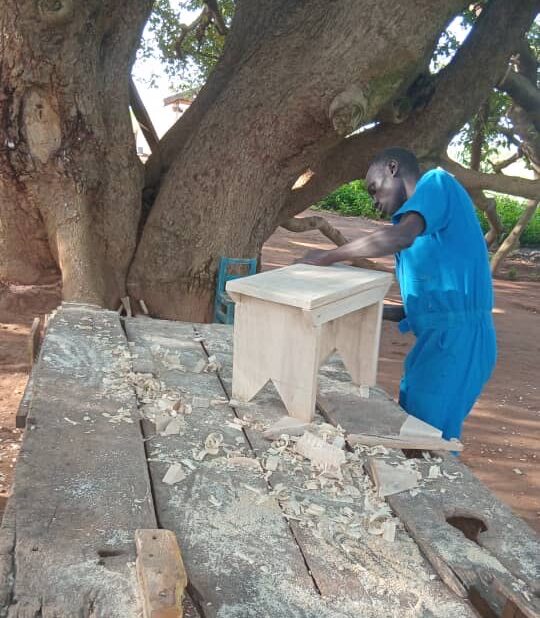
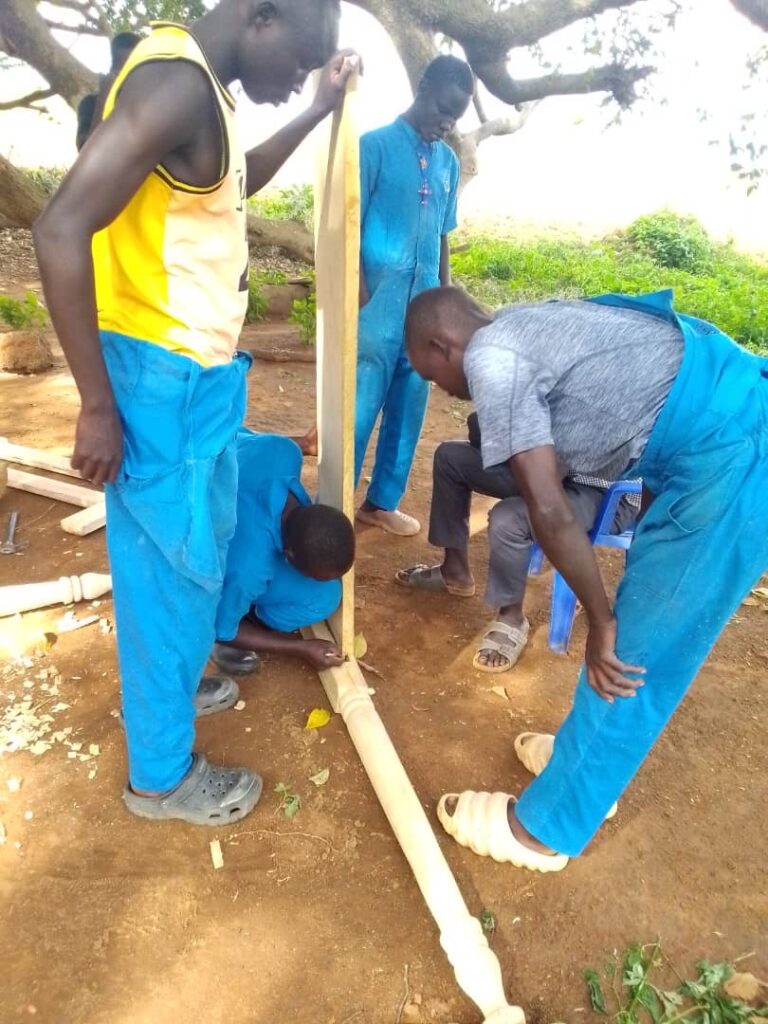
We provide carpentry and Joinery training to our preacher training students, school dropouts, youths, and former cattle raiders as a strategy of breaking the cycle of poverty and cattle rustling. This initiative is aimed at transforming unskilled youths and Er warriors into self-reliant preachers/ evangelists, empowering them to generate sustainable income to support their families and Church activities.
There is a strong demand for locally made, affordable furniture and construction materials in the region. Equipping locals with these skills allows communities to meet their own infrastructure and furnishing needs without relying on expensive items from other parts of the country and abroad.
Skills training is paired with business and financial literacy, teaching students how to secure purchase orders, manage funds, and establish sustainable livelihoods.
BRICK LAYING AND CONCRETE PRACTICES
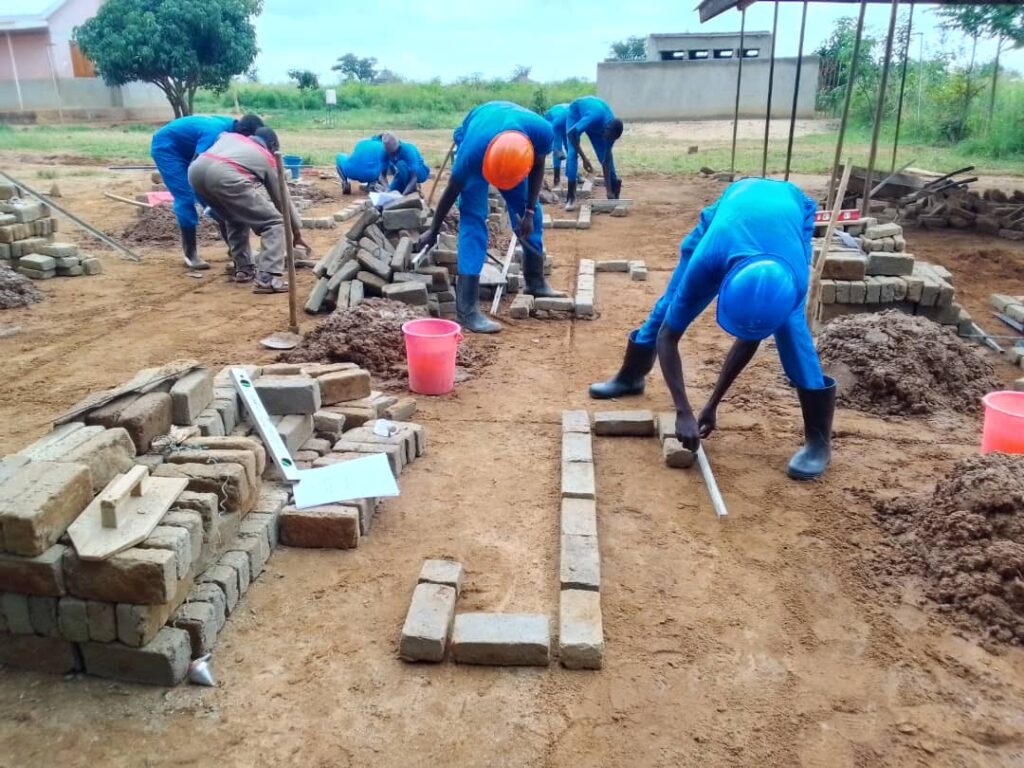
We strongly believe that training our people in making preachers and Christians with brick-laying skills will provide sustainable economic alternatives, fostering long-term peace among pastoralist communities, and enhancing ministry focus and stability in the region. This vocational skill equips formerly armed men and women with reliable, non-violent ways to support themselves and ministry work.
With regions historically prone to climate shocks, vocational training helps residents diversify their incomes, reducing total dependence on unpredictable livestock rearing and agriculture.
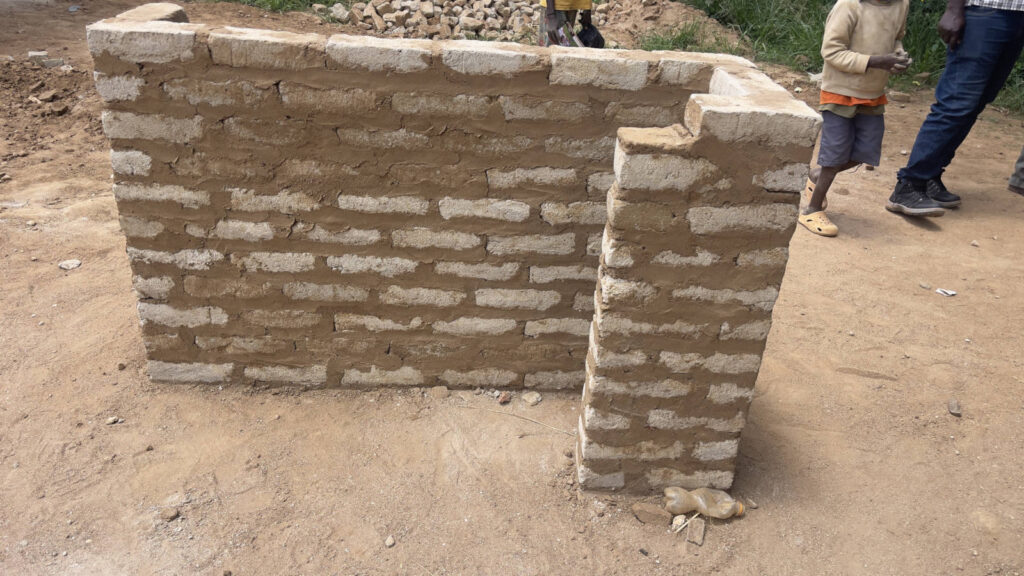
The skills learned here are put to immediate use, building small permanent homes for people and themselves, and community centres.
HAIR DRESSING
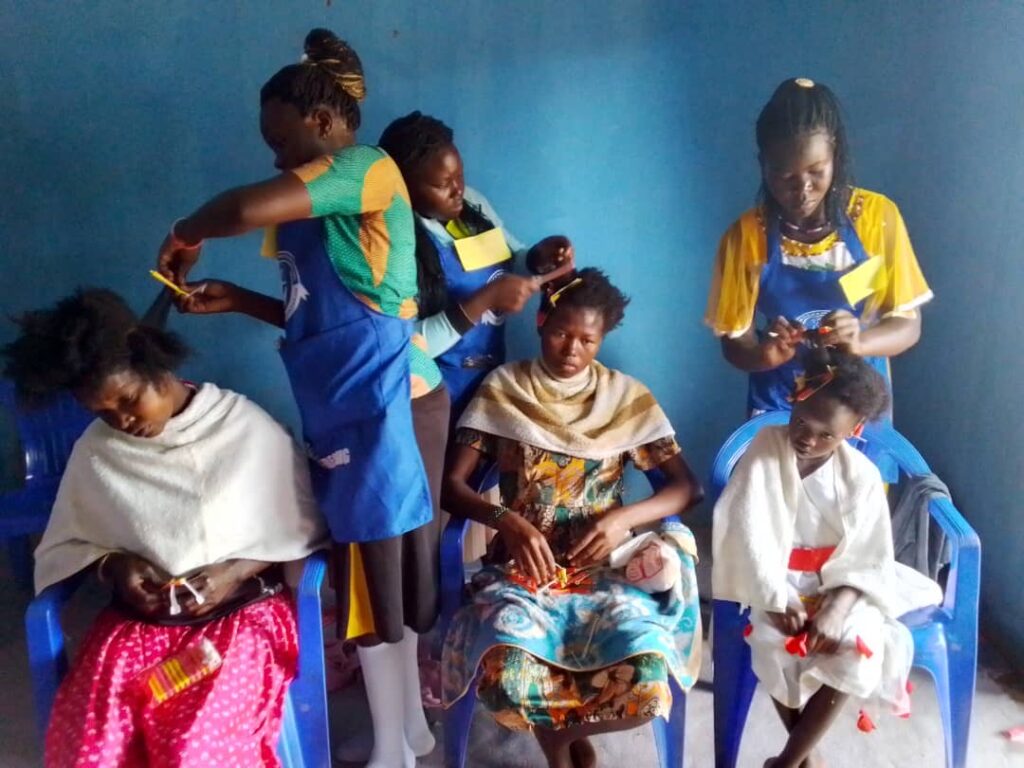
We train women and young girls in hair dressing to provide them with an economic empowerment window. The beauty industry offers financial independence through low-cost, mobile, and self-employment business models.
We also aim at reducing reliance on traditional, unpredictable livelihoods and helping vulnerable women break cycles of poverty, early marriage, and domestic violence.
Providing vocational skills to young women creates alternatives to forced marriage and provides a path to financial autonomy.
Skills like braiding hair, cutting, and hair care can be practiced anywhere, allowing our students and graduates to easily adapt to different communities.